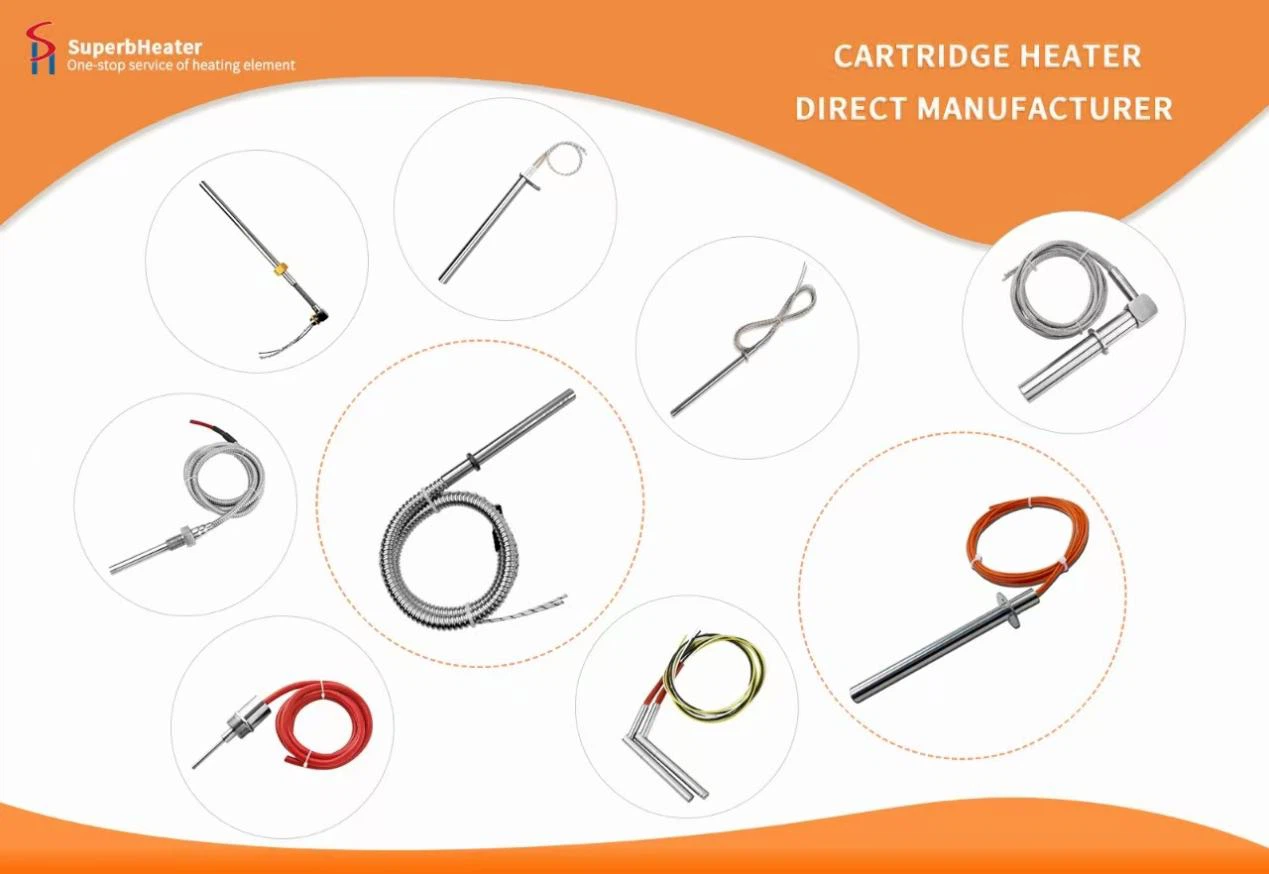
A purchasing agent compares quotes for square cartridge heaters from multiple suppliers, finding price variations exceeding 300 percent for components that appear identical on specification sheets. The lowest-cost option promises equivalent performance to the premium brand at substantial savings. Without deeper understanding of what separates reliable heaters from those destined for early failure, the choice seems obvious. Yet maintenance records tell a different story-the premium heaters consistently outlast economy alternatives by margins that make initial cost irrelevant.
Square cartridge heaters in the 6x6mm, 8x8mm, and 10x10mm sizes vary enormously in materials, construction quality, and resulting service life. Understanding these variations requires looking beneath the sheath at the internal components and manufacturing processes that determine how long a heater survives in demanding applications. This knowledge transforms purchasing from price comparison into value optimization based on total cost of ownership.
Resistance wire quality fundamentally limits heater life regardless of other design factors. Premium heaters use nickel-chromium alloys drawn to precise specifications, with consistent composition that maintains stable resistance throughout the wire length . Lower-cost alternatives may use wire with wider alloy tolerances, resulting in resistance variations that create hot spots during operation. Some economy heaters incorporate recycled wire with unknown history and unpredictable performance. The difference appears not in initial operation but after hundreds of thermal cycles when wire fatigue causes failure.
Wire winding consistency affects temperature distribution along the heater length. Precision winding machines maintain exact tension and spacing, producing coils with uniform pitch that generate consistent heat per unit length . Hand-wound heaters or those from less sophisticated equipment vary in winding density, creating zones of higher and lower heat generation. These variations matter most in applications requiring uniform temperature profiles, where hot spots accelerate failure in some areas while adjacent zones run cooler than desired.
Magnesium oxide insulation purity determines dielectric strength and thermal conductivity. Electrical-grade magnesium oxide undergoes processing to remove impurities that would conduct electricity at elevated temperatures . Higher purity material transfers heat more effectively while maintaining electrical isolation between the resistance wire and sheath. Lower-grade insulation may contain conductive contaminants that cause gradual current leakage, eventually leading to short circuits and failure. The difference cannot be detected without specialized testing but appears clearly in service life comparisons.
Swaging density affects every aspect of heater performance. Proper swaging compresses the magnesium oxide to approximately 95 percent of theoretical maximum density, maximizing thermal conductivity while maintaining electrical isolation . Underswaged heaters contain voids that allow the resistance wire to shift position during thermal cycling, eventually contacting the sheath and shorting. Overswaging can damage the resistance wire or reduce cross-section in ways that increase current density and generate excess heat. Consistent swaging along the entire heater length requires precise process control that only experienced manufacturers achieve.
Sheath material selection must match both operating temperature and environmental exposure. Standard 304 stainless steel serves well in dry applications below 450 degrees Celsius but suffers corrosion in contact with some plastics and chemicals . For processing PVC, fluoropolymers, or other materials releasing corrosive gases during heating, Incoloy sheaths provide the necessary resistance. Marine environments or applications with frequent cleaning require consideration of pitting and crevice corrosion that standard stainless may not withstand. Each material option adds cost but may prove essential for acceptable service life.
Cold end length specifications often receive insufficient attention during heater selection. The cold end-the portion of the heater where the resistance wire connects to lead wires-operates at lower temperature than the heated section . Too short a cold end allows heat to conduct into the termination area, potentially damaging lead connections or overheating the machine interface. Too long a cold end wastes space that could provide useful heating. Optimal cold end length depends on operating temperature, surrounding material thermal conductivity, and termination type.
Lead wire construction affects both installation ease and long-term reliability. High-temperature fiberglass insulation withstands continuous exposure to 250 degrees Celsius but absorbs moisture if damaged . Silicone rubber insulation offers flexibility and moisture resistance but degrades above 200 degrees. Stainless steel overbraid protects against abrasion but adds stiffness that complicates routing in tight spaces. The best lead selection balances these factors for the specific application environment, sometimes using different constructions for different sections of the same lead.
Integral thermocouple options simplify temperature sensing in crowded tooling. Thermocouples embedded in the heater sheath provide temperature feedback exactly where heating occurs, eliminating the need for separate sensor holes . Grounded thermocouples respond quickly but may pick up electrical noise that affects control stability. Ungrounded thermocouples provide electrical isolation at the cost of slightly slower response. Dual-element thermocouples allow backup sensing for critical applications where sensor failure would stop production.
Watt density selection determines whether a heater operates within its design limits or pushes toward premature failure. Higher watt densities generate faster heat-up and response but increase internal temperatures that accelerate wire oxidation . Lower watt densities extend life at the cost of slower response. Experience suggests that continuous operation above 30 watts per square centimeter demands excellent heat sinking and may still result in shortened life. Intermittent operation allows higher densities because cooling periods reduce cumulative thermal stress.
Quality certifications and testing provide objective evidence of heater capability. UL or CE certification indicates compliance with safety standards but doesn't guarantee long life . Manufacturers performing 100 percent hipot testing verify insulation integrity on every heater rather than sampling. Resistance measurements compared to specifications confirm electrical characteristics before shipment. Some premium suppliers provide test reports documenting actual performance rather than nominal specifications.
Application engineering support separates component suppliers from thermal system partners. Experienced heater manufacturers help select appropriate watt densities, sheath materials, and lead configurations for specific applications . They identify potential problems in proposed installations before heaters are built. They recommend design modifications that improve performance or extend life. This expertise, while not visible on specification sheets, adds value that component-level purchasing decisions miss.
Square cartridge heaters in 6x6mm, 8x8mm, and 10x10mm sizes serve critical functions in industrial processes where failure stops production. The investment in quality materials, consistent construction, and application-appropriate design pays returns through extended service life, reduced downtime, and predictable maintenance. Understanding what separates premium heaters from economy alternatives transforms purchasing from a cost center into a strategic activity that directly affects manufacturing profitability.