Lead wires break. This simple fact causes more 26mm cartridge heater service calls than element degradation, sheath corrosion, or control failures combined. The transition from rigid heater body to flexible cable concentrates mechanical stress-vibration, thermal cycling, installation handling-into a small zone where conductors fatigue and insulation cracks.
Effective strain relief distributes this stress over distance. A gradual transition from fully constrained to fully flexible, rather than abrupt change at a single point, prevents concentration. For 26mm heaters with substantial lead wire gauges-often 6mm² or larger for high-power units-this requires thoughtful mechanical design.
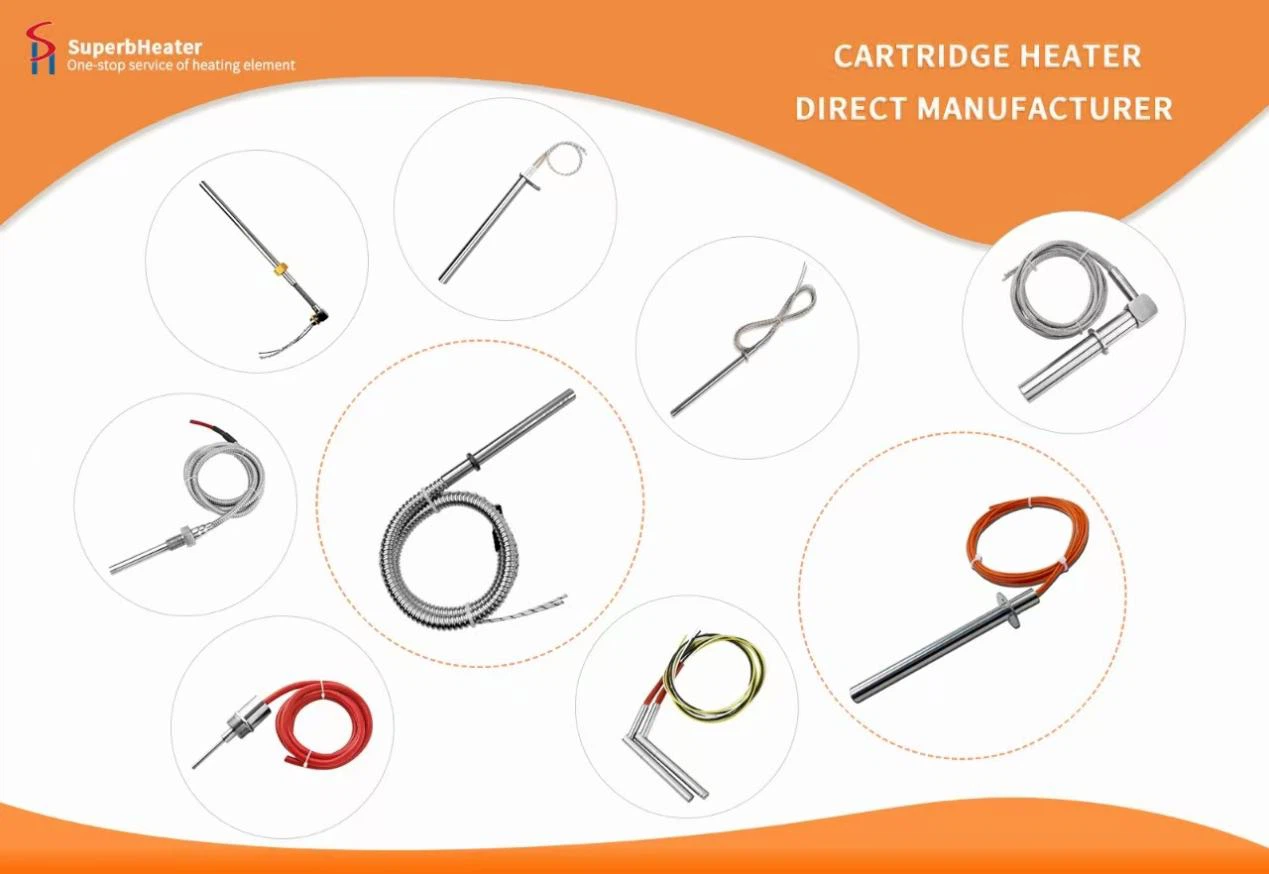
Spring-loaded supports provide one solution. The lead wire exits the heater into a coiled spring that absorbs vibration and thermal movement while maintaining position. The spring material-typically stainless steel-must withstand the temperature environment without relaxation or corrosion. Design ensures the spring engages before stress reaches the critical heater exit point.
Flexible conduit systems offer alternative protection. Metal or high-temperature polymer conduit encloses leads from heater to junction box, preventing abrasion and constraining bending radius. The conduit must accommodate thermal expansion without transferring stress to terminations. Properly designed systems allow 10-20mm movement without loading the heater.
According to field reliability data, strain relief improvements extend 26mm heater service life 30-50% in vibration environments-automated presses, rotating drums, reciprocating machinery. The investment in proper mechanical design, typically 5-10% of heater cost, returns multiples through reduced maintenance.
Thermal expansion of lead conductors creates hidden stress. Copper wire expands 0.17% per 100°C temperature change. A 300mm lead section heated from 25°C to 125°C lengthens 0.5mm. Constrained expansion generates tensile or compressive stress that fatigues connections. Allowing free movement, or using expansion loops, accommodates this dimensional change without damage.
Bend radius specifications prevent conductor damage. High-temperature insulation materials-silicone, fiberglass, mineral insulation-have limited flexibility. Sharp bends crack or delaminate, creating electrical and mechanical weak points. Minimum bend radius of 6-10 times cable diameter, depending on construction, preserves integrity.
Installation handling protocols prevent immediate damage. Pulling 26mm heaters into holes by lead wires, rather than pushing on the sheath, stresses terminations. Twisting during insertion rotates internal connections. Training maintenance personnel in proper techniques-using extraction tools, supporting leads, avoiding torque-prevents well-intentioned damage.
Vibration analysis identifies resonant frequencies. Equipment with 26mm heaters may have natural frequencies matching operating speeds, amplifying stress. Modal analysis and structural modification-stiffening, mass redistribution, damping-address these resonances. Heater mounting becomes part of broader mechanical system design.
Environmental protection complements strain relief. Moisture, chemicals, and particulates attack lead wire insulation after mechanical damage creates entry points. Sealed systems with appropriate IP ratings prevent environmental degradation that accelerates failure. The combination of mechanical and environmental protection provides comprehensive reliability.