Core Functionality
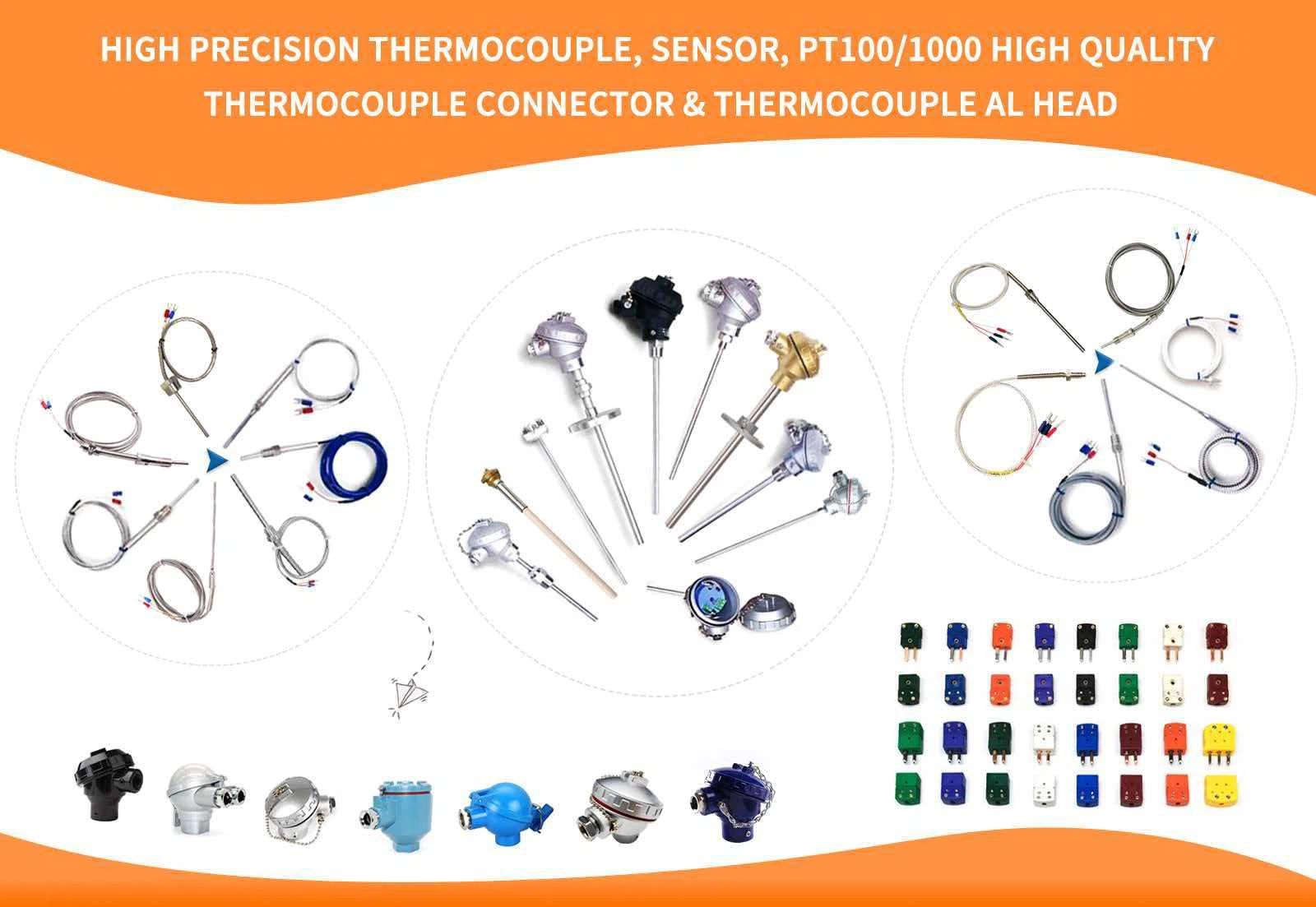
The spring-loaded thermocouple (also known as a compression spring thermocouple) is a non-invasive surface temperature sensor. Its core function is to apply constant pressure through a built-in mechanical spring, ensuring the sensing end is in close contact with the surface of the object being measured, achieving high-precision, fast-response temperature measurement. It essentially utilizes the Seebeck effect, converting the temperature difference between the two metal wire junctions of the thermocouple into a weak thermoelectric potential, which is then converted into a temperature reading by an instrument. Temperature measurement can be completed without drilling or welding.
Key Technological Advantages
Constant Pressure Contact: The spring structure ensures continuous contact between the measuring end and the measured surface, overcoming thermal resistance caused by surface oxide layers, oil stains, or minor unevenness, significantly improving temperature measurement stability;
Fast Response: Thermal response time ≤1 second (some models reach 0.2 seconds), suitable for dynamic temperature change scenarios, such as injection molding machine nozzle temperature control;
Non-destructive Installation: No need to damage the equipment structure, especially suitable for industrial environments where drilling or shutdown is difficult or prohibited, such as high-pressure vessels, pipelines, and molds;
Reusable: Supports ≥50 disassembly and reassembly cycles, and the spring module can be replaced independently, reducing long-term operation and maintenance costs;
Strong Anti-interference: Uses armored structure and high-insulation materials (such as magnesium oxide, glass fiber), resistant to high temperatures, vibration, and electromagnetic interference.
Typical Industrial Application Scenarios
|
Industry |
Application Location |
Value Proposition |
|
Injection Molding |
Barrel, Nozzle, Hot Runner Plate |
Real-time monitoring of melt temperature, preventing material degradation, and improving product consistency |
|
Chemical and Pharmaceutical |
Reactor Outer Wall, Steam Jacket |
Non-invasive monitoring of reaction temperature, meeting GMP sterile requirements, and avoiding contamination |
|
Power and Energy |
Boiler Flue, Turbine Casing |
Replaces infrared temperature measurement, resistant to smoke and dust interference, enabling continuous online monitoring |
|
Food Processing |
Sterilizer, Cooking Vessel Outer Wall |
Easy to clean, no dead corners, compliant with HACCP food safety standards |
|
Metal Processing |
Mold Surface, Die Casting Machine |
Precise control of molding temperature, reducing scrap rate and shortening cycle time |
|
New Energy |
Lithium Battery Module Casing, Thermal Management System |
Multi-point distributed temperature measurement, supporting thermal balance control and safety early warning |
Standard Compliance and Technical Basis
The design and manufacture of the snap-ring thermocouple strictly adhere to the following national and international standards:
GB/T 16839.1-2018 (equivalent to IEC 60584-1): Defines the thermoelectric potential-temperature relationship and tolerance levels for K-type, J-type, E-type, and other calibration types;
GB/T 30429-2013: Specifies the structural requirements, thermal response time (≤5s), insulation resistance (≥100MΩ), and other performance indicators of industrial thermocouples;
JB/T 5582-2014: Applicable to the manufacture and inspection of armored snap-ring thermocouples, ensuring long-term stability and safety.
Comparative Value with Traditional Temperature Measurement Methods
The snap-ring (or gasket-style) thermocouple sensor provides a modern, surface-mounted alternative to conventional insertable thermocouples and resistance temperature detectors (RTDs/probes). Traditional methods typically require drilling holes, welding thermowells, or inserting probes directly into the process medium or through pipe/vessel walls. In contrast, the gasket sensor attaches externally to the surface, creating a truly non-invasive or minimally invasive temperature measurement solution.
This design delivers several key advantages in installation efficiency. No process shutdown, pipe cutting, or welding is needed-reducing installation time from hours or days to minutes. Retrofitting existing equipment becomes straightforward and cost-effective, avoiding expensive modifications, pressure testing, or regulatory approvals associated with penetration points. Equipment integrity remains fully preserved: the risk of leaks, corrosion at weld seams, or structural weakening is eliminated, which is especially valuable in high-pressure, hazardous, or sanitary processes (e.g., chemical, pharmaceutical, or food industries).
Maintenance costs are significantly lower over the lifecycle. Traditional immersion probes often suffer from fouling, erosion, or drift due to direct exposure to aggressive media, necessitating frequent removal, cleaning, recalibration, or replacement-sometimes requiring system downtime. The external gasket sensor avoids these issues entirely; it experiences less thermal shock, minimal contamination, and easier periodic inspection or grease reapplication. Service life can extend comparably or longer in many scenarios, with simpler upkeep.
Response time stands out as another major benefit: gasket sensors typically achieve 2–8 seconds, far surpassing the 30+ seconds common in sheathed immersion probes (due to thermal mass of the thermowell or sheath). This rapid dynamic response supports real-time monitoring, better process control, and early detection of anomalies.
In predictive maintenance and smart factory (Industry 4.0) applications, the gasket design enables dense, scalable temperature sensing networks. Multiple points can be monitored on pipes, tanks, motors, or heat exchangers without invasive alterations, facilitating comprehensive thermal mapping, anomaly detection via IoT platforms, and data-driven insights for condition-based maintenance. Wireless or networked configurations further reduce cabling complexity compared to traditional wired probes.
While traditional immersion sensors may offer slightly higher absolute accuracy in stable, clean conditions (especially RTDs), the gasket thermocouple's overall system-level advantages-installation speed, non-disruptive deployment, preserved asset integrity, faster response, and lower total ownership costs-make it superior for many surface-temperature and non-invasive monitoring needs in modern industrial settings.