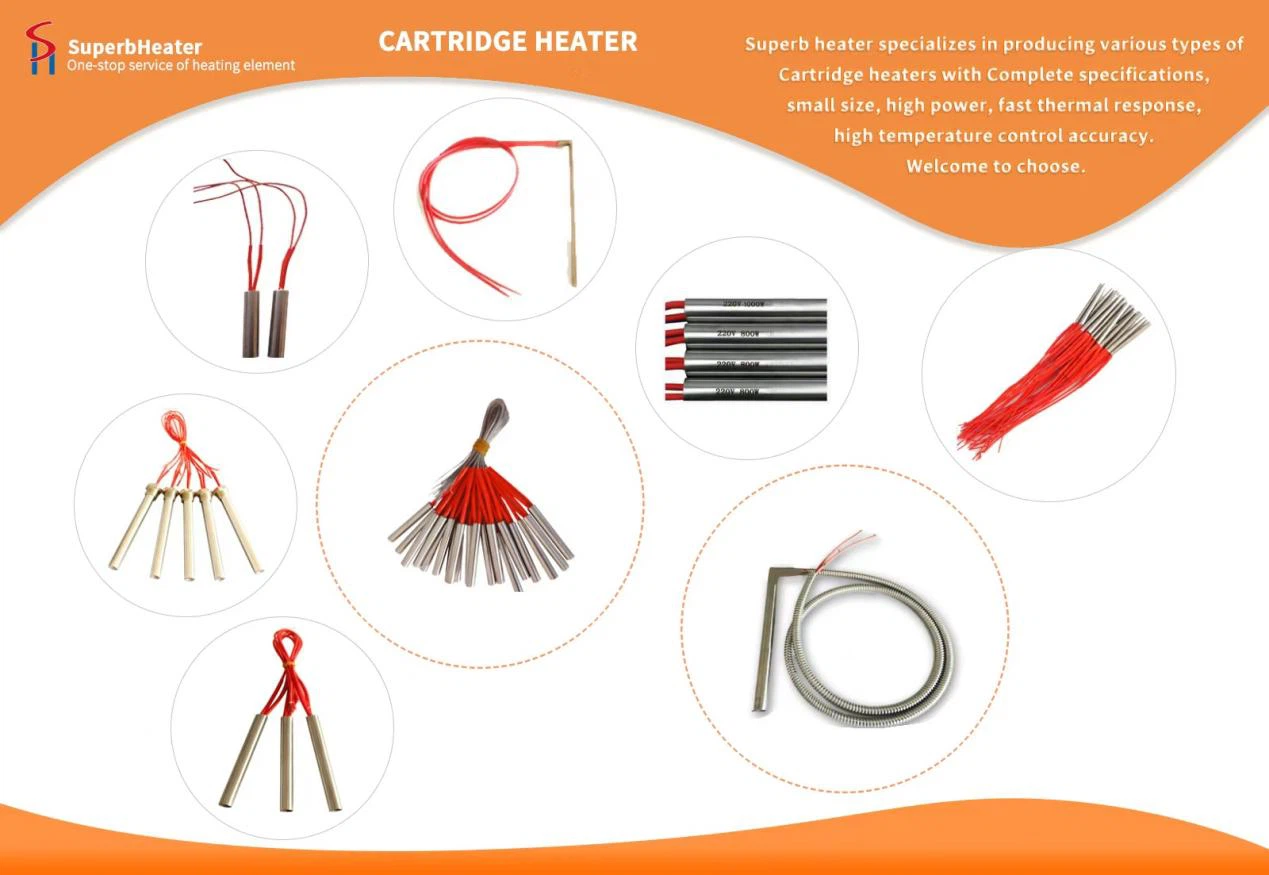
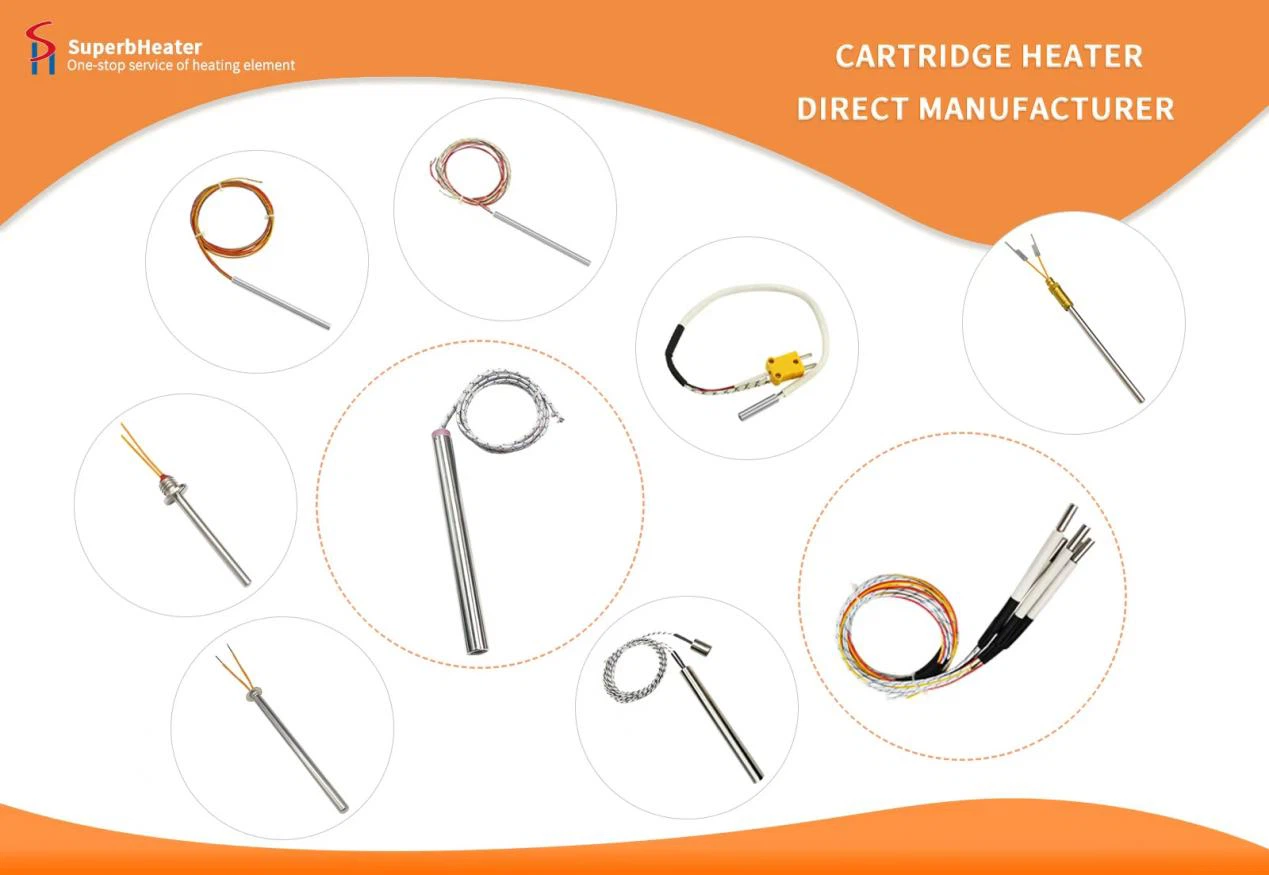
Cartridge heater serves as a highly efficient heating solution across numerous industrial sectors. Its compact cylindrical design delivers concentrated heat in limited spaces where traditional heaters fall short. The cartridge heater excels in applications demanding rapid and precise temperature control.
The core heating part of cartridge heater is nickel-chromium heat-resistant alloy wire. This wire is spirally wound around a magnesium oxide core rod featuring outstanding insulation and thermal conductivity. Magnesium oxide powder fills the gap between the heating wire and the metal sheath as an insulating layer. Machines then compress the assembly to remove internal air pockets, forming a dense, integrated unit with superior heat transfer, moisture resistance, and mechanical strength. This construction allows cartridge heater to operate reliably at high temperatures up to 800°C or more while maintaining structural integrity under pressure and vibration.
Due to its small volume combined with high power density, cartridge heater is particularly ideal for heating metal molds. It pairs effectively with thermocouples to provide precise temperature monitoring and control, minimizing overheating risks and ensuring consistent process outcomes in demanding production environments. Engineers value its fast heat-up times and ability to reach stable operating temperatures quickly.
Cartridge heater is primarily applied in stamping molds for shaping sheet metals, injection molds for melting and forming plastic parts, extrusion molds for producing pipes and profiles, hot cutting knives for clean material slicing, packaging machinery for heat sealing films and bags, rubber molding molds during vulcanization, melt-blown molds in nonwoven fabric production, pharmaceutical machinery for drying and sterilization units, uniform heating platforms, hot pressing molding machinery for composites and laminates, semiconductor processing requiring contamination-free heating, and liquid heating systems such as oil baths or chemical reactors. In each case, it offers uniform temperature distribution and energy efficiency. For example, in injection molding, cartridge heater maintains mold temperatures to reduce cycle times and improve part quality. In packaging lines, it heats sealing bars evenly to create airtight closures without damaging sensitive contents. Semiconductor applications demand its clean operation to avoid particle contamination during wafer processing.
A typical example illustrates the versatility of cartridge heater in embedded mold heating. Multiple units are inserted horizontally into channels drilled within a metal plate. Engineers calculate optimal power distribution based on thermal modeling and adjust wattage for each individual cartridge heater accordingly. This results in highly uniform surface temperatures across the entire metal module, preventing warping or defects. Such uniform heating platforms are widely used for target material heating in sputtering and coating processes, precious metal stripping and recovery from electronic waste, and mold preheating to ensure even thermal expansion before production starts.
Beyond core uses, cartridge heater provides advantages including long operational lifespan, corrosion resistance through sheath materials like stainless steel or Incoloy, and adaptability to custom lengths, diameters, and lead configurations. It withstands vibration and shock common in heavy machinery. In liquid heating, immersion models directly transfer heat to fluids, achieving fast temperature rise without hotspots that could degrade sensitive chemicals or oils. Installation requires proper hole sizing for tight fit to maximize contact and heat conduction. Regular inspection of thermocouples ensures safety and optimal performance.
Overall, the reliability and precision of cartridge heater make it indispensable in modern manufacturing, improving productivity and product consistency.